Harmonious Canvas’ Fusion of My Passions
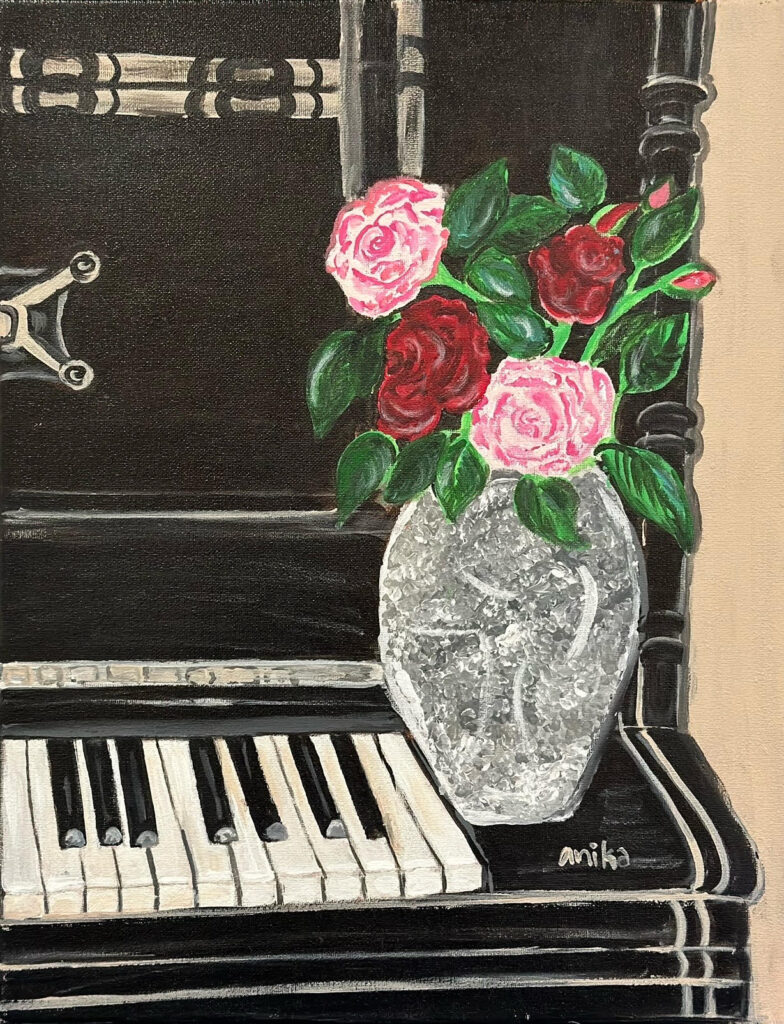
By- Anika Shiroor, 7th grade There are two major influences in my life which started early on – art and piano. For this blog, I want to present Piano, Still-Art on canvas which I painted in 2020. Not only was this the first canvas I painted, but this was also the piece where both my passions intersected. Ever since I was a little girl, I remember my fascination for drawing. I would fill pages and pages in books or draw on boards in my room. I would draw and write stories to express myself. I had a couple of friends who were interested in art, just like me and we would collaborate on stories with art together. I have lost a lot of that work but some of them were preserved by my mom as digital memories on Instagram and Youtube. When I turned five, my parents enrolled me in piano lessons which were super fun thanks to my teacher, Ms. Elena. She made piano effortless and with time I prepared for the Certificate of Merit exams that are held every year by the Music Teachers’ Association of California with her help. I completed level 5 this year. These creative fields have impacted me immensely and both piano and art hold a special place in my heart. In my opinion, these are the nicest ways to express yourself. In 2020, my art teacher, Ms Nidhi announced that we were ready to paint our first canvas art. When I heard that we could choose our own subject I immediately went online to find ideas. While searching for ideas I came across this piano painting online. I knew right then, that I would do this painting because of my love for the piano. This canvas painting combines the luxury of a piano with the beauty of roses. Even though it was a little tough for me back then, I discussed it with my teacher and set on to do this piece. This artwork was created with acrylic paints over a span of a few weeks. I first had to sketch it out and practice it in my art book to ensure that I was familiar with everything in the painting. I made a lot of mistakes because this was my very first canvas painting. This was also my first attempt with acrylic paint. As I understood that all my mistakes in the painting could be covered up by adding more paint, I got impatient with the process. Very soon I realized, that this impatient mindset made my work even worse. With a lot of encouragement from my teacher and correction, I was finally able to complete this artwork. Of course, I was super happy with it as this was my first artwork on canvas even though it had a lot of corrections. The lesson that I learned was that the best results came out when I was patient with the process. I also realized that in my hurry to complete the work, I often rushed and that resulted in a lot of feedback from my teacher both in technique and finish. This canvas is presently hanging on my bedroom wall as a reminder of the process of learning and my continued efforts in art.
Warli Art: Indian Wedding Village Scene
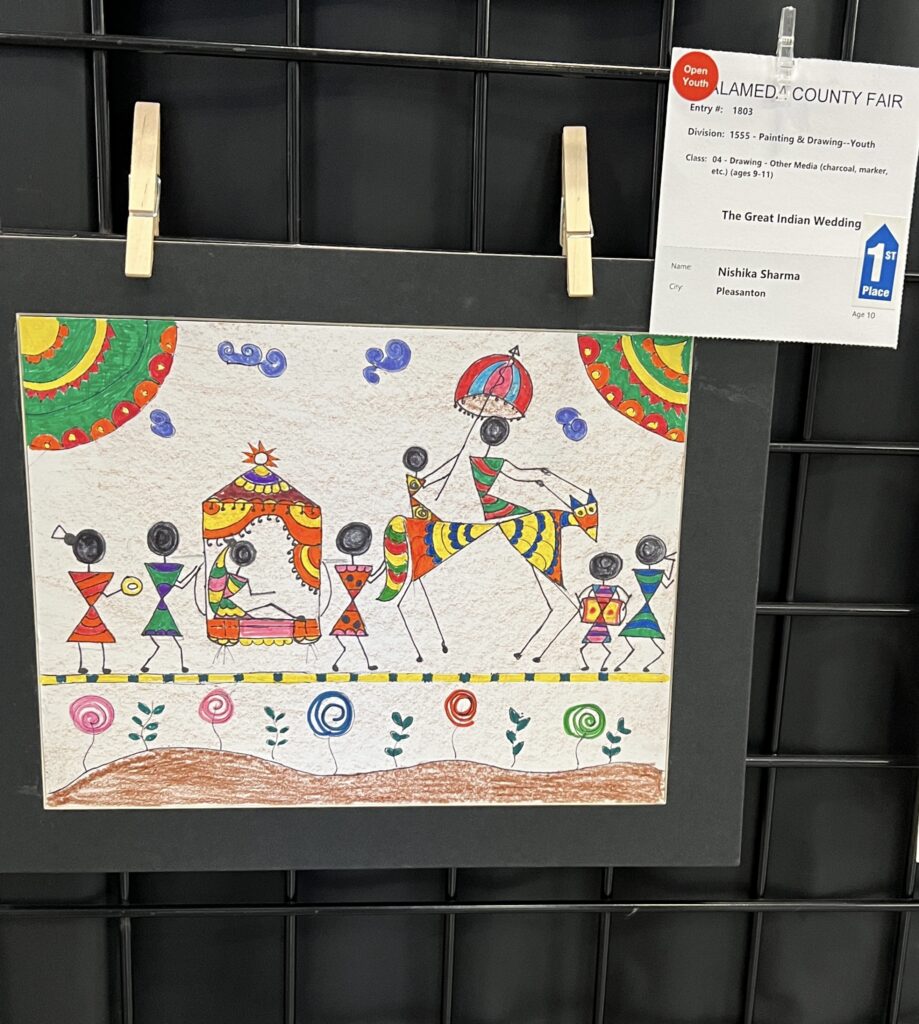
By Nishika Sharma, 7th Grade PleasantonOriginating from Maharashtra, a style of tribal, or folk, art, Warli art, is believed to be one of the oldest art forms of history and comes from one of the largest tribes of India, the Warli tribe. The culture of Warli art is centered around the concept of Mother Nature and elements of nature are often depicted in Warli paintings. If you’ve seen Warli art, you may have noticed the intricate geometric patterns that make this art style unique. These patterns are used to depict human figure, house and daily work like hunting, dancing, sewing, etc. However, the regular theme of Warli art is marriage and the unique aspect of these kinds of paintings is that it does not depict mythological characters or images of god and goddesses but depicts social life. Warli art can be done on anything from walls to purses and many other accessories or vehicles. Being of Indian American heritage, I have attended several Indian weddings and was always amazed by the colors and artistry used in these weddings. A famous fairgrounds know as The Alameda County Fair has been held in Pleasanton, CA since 1912, and my art teacher, Mrs. Nidhi suggested that I participate in the fine arts contest in the fair and do a piece on folk art. For this project, I looked at many reference images of different folk art scenes that Mrs. Nidhi showed to me, and the one depicting an Indian Wedding stood out to me the most because of the intricate dress patterns, the instruments, and all the other features in the piece. So, she told me to start with a rough draft and sketch the basic shapes such as circles, triangles, squares, etc. After getting basic shapes down the only thing left to do is add different geometric patterns on the dresses and different objects, like the palanquin and instruments, and then make it colorful. Since folk art is solely made of shapes, doing a rough sketch was simple, and I quickly moved on to the final draft where I traced everything with black, added some scenery, and washed the page with bright colors. Once I was happy with how the scene stood out, I showed it to Mrs. Nidhi and she told me I can submit it to the Alamenda County Fair. I submitted the work to compete in the Youth still exhibits category (paintings and drawings). Later, when the date came, I visited the fair with my family, had some fun, and made my way to the exhibit hall where I saw my art work displayed, and I was thrilled to see that I was awarded first place in the 9-11 year category. After going through this experience, I knew I wanted to continue submitting my art in this contest for years to come.